
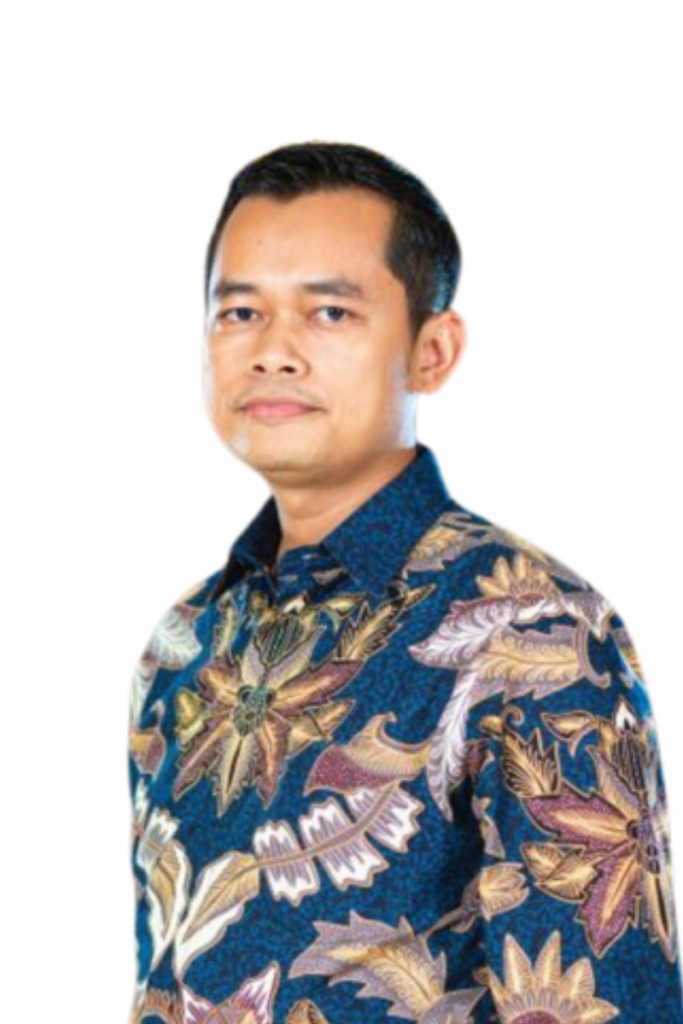
Al Muizzuddin Fazaalloh, S.E., M.E., Ph.D
Undergraduate Programme in Development Economics (PS EP) is a study programme under the Department of Economics (JIE), Faculty of Economics and Business Universitas Brawijaya (FEB-UB). Since 1963, educational activities have been carried out where at that time PS EP was still called the Department of General Economics. Initially, PS EP had 5 interests, namely (i) Development Planning; (ii) State and Regional Finance; (iii) Resource; (iv) Finance and Banking; and (v) Islamic Economics. In its development the last two interests turned into separate study programs, namely the Economics, Finance and Banking Study Program (PS EKP) and the Islamic Economics Study Program (PS EKIS).
In the process of administering lectures, the curriculum at PS EP is designed based on its relevance to the objectives, scope and depth of material, organization that encourages the formation of hard skills and personality and behavioral skills (soft skills) that can be applied in various situations and conditions.
The PS EP curriculum also contains courses, modules, learning plans that support the achievement of graduate competencies and provide flexibility for students to broaden their horizons and deepen their expertise according to their interests, and are equipped with course descriptions, modules, lesson plans and evaluations. PS EP Curriculum Development refers to:
- Law of the Republic of Indonesia Number 20 of 2003 concerning the National Education System;
- Law of the Republic of Indonesia Number 12 of 2012 concerning Higher Education;
- Government Regulation Number 4 of 2014 concerning the Implementation of Higher Education and Management of Higher Education;
- Presidential Regulation of the Republic of Indonesia Number 8 of 2012 concerning the Indonesian National Qualifications Framework (KKNI).
- Minister of Education and Culture Regulation Number 3 of 2020 concerning National Higher Education Standards
- Government Regulation Number 57 of 2021 concerning National Education Standards.
- Regulation of the Minister of Education and Culture Number 23 of 2015 concerning the Growth of Character to accommodate the development of literacy.
- Regulation of the Chancellor of the University Brawijaya Number 34 of 2020 concerning the Curriculum of the Independent-Learning-Independent Study Program (MBKM)
Vision
“To become an international standard higher education institution in the field of economics and applied economics based on Indonesian culture.”
Mission
- Organize the renewal of education, research, and community service in economics and development planning with a critical, creative, and innovative thinking approach
- Conduct and Publish research, community service and other scientific activities for the development of applied economics; and
- Enhance the graduates’ competitiveness in applied economics on national and international levels.
Program Educational Objectives
The objective of the Development Economics S1 Study Program is to produce graduates with a bachelor’s degree in economics for a career as a economic analyst with the following competencies:
- PEO 1: Capable of mastering economic theory and applying it to solve economic problems using economic principles.
- PEO 2: Capable of developing themselves in a sustainable manner through research and education in the field of economics.
- PEO 3: Capable of communicating orally and in writing well, professionally, with good morals and ethics in the economic field.
Graduate Profiles of the Undergraduate Programme in Development Economics (PS EP) are staff / assistant analysts, research assistants, bankers, and young entrepreneurs who have knowledge and skills in four aspects, which include:
1. Mastering the basic principles of economics both in the micro and macro scope
2. Mastering the theory of development planning, resources, or state and regional finances in an integrated manner
3. Utilizing information technology in the fields of development planning, resources, or state and regional finances
4. Applying development planning theory, resources, or state and local finances to develop a career in the world of work or continue studies
| Courses | Credits | ECTS | Type |
|---|---|---|---|
| Semester 1 | |||
| Religion (Islam) | 2 | 3 | C |
| Religion (Chatolic) | 2 | 3 | C |
| Religion (Protestant) | 2 | 3 | C |
| Religion (Hindu) | 2 | 3 | C |
| Religion (Buddhist) | 2 | 3 | C |
| Indonesian | 2 | 3 | C |
| English | 2 | 3 | C |
| Pancasila | 2 | 3 | C |
| Principles of Business Economics | 3 | 4.5 | C |
| Economics and Business Mathematics I | 3 | 4.5 | C |
| Statistics for Economics and Business I | 3 | 4.5 | C |
| Introduction to Management | 3 | 4.5 | C |
| Subtotal Semester 1 | 20 | 30 | |
| Semester 2 | |||
| History of Economic Thought | 3 | 4.5 | C |
| Macroeconomics I | 3 | 4.5 | C |
| Microeconomics I | 3 | 4.5 | C |
| Economic and Business Mathematics II | 3 | 4.5 | C |
| Statistics for Economics and Business II | 3 | 4.5 | C |
| Civics | 2 | 3 | C |
| Development Planning Specialization | |||
| Introduction to Accounting | 3 | 4.5 | C |
| State and Regional Finance Specialization | |||
| Introduction to Management | 3 | 4.5 | C |
| Resources Economics Specialization | |||
| Introduction to Accounting | 3 | 4.5 | C |
| Data Analytics for Economist | |||
| Introduction to Accounting | 3 | 4.5 | C |
| Subtotal Semester 2 | 20 | 30 | |
| Semester 3 | |||
| International Economics I | 3 | 4.5 | C |
| Political Economics | 3 | 4.5 | C |
| Development Economics I | 3 | 4.5 | C |
| Public Economics I | 3 | 4.5 | C |
| Macroeconomics II | 3 | 4.5 | C |
| Microeconomics II | 3 | 4.5 | C |
| Monetary Economics I | 3 | 4.5 | C |
| Econometrics I | 3 | 4.5 | C |
| Subtotal Semester 3 | 24 | 36 | |
| Semester 4 | |||
| Institutional Economics | 3 | 4.5 | C |
| Introduction to Data Science for Economics and business | 3 | 4.5 | C |
| Public Economics II | 3 | 4.5 | C |
| Research Methodology | 3 | 4.5 | C |
| International Economics II | 3 | 4.5 | C |
| Monetary Economics II | 3 | 4.5 | C |
| Econometrics II | 3 | 4.5 | C |
| Development Planning Specialization | |||
| Development Planning I | 3 | 4.5 | C |
| State and Regional Finance Specialization | |||
| Regional Development Planning | 3 | 4.5 | C |
| Resources Economics Specialization | |||
| Rural Economics | 3 | 4.5 | C |
| Data Analytics for Economist | |||
| Introduction to Financial Technology | 3 | 4.5 | C |
| Subtotal Semester 4 | 20 | 30 | |
| Short Semester | |||
| Community Project | 4 | 6 | C |
| Subtotal | 4 | 6 | |
| Semester 5 | |||
| Indonesian Economy | 3 | 4.5 | C |
| Critical Thinking Logic | 3 | 4.5 | C |
| Entrepreneurship | 2 | 3 | C |
| Development Planning Specialization | |||
| Development Planning II | 3 | 4.5 | C |
| Public Policy Analysis | 3 | 4.5 | C |
| Urban Economics | 3 | 4.5 | C |
| Industrial Economics | 3 | 4.5 | C |
| Regional Economics | 3 | 4.5 | C |
| State and Regional Finance Specialization | |||
| Public Budgeting | 3 | 4.5 | C |
| Intergovernmental Transfer | 3 | 4.5 | C |
| Regional Financing & Invesment | 3 | 4.5 | C |
| Regional Finance Economics | 3 | 4.5 | C |
| Public Sector Accounting | 3 | 4.5 | C |
| Resources Economics Specialization | |||
| Agricultural Economics | 3 | 4.5 | C |
| Economic Sosiology | 3 | 4.5 | C |
| Natural Resources & Environmental Economics | 3 | 4.5 | C |
| Human Resources & Labor Economics | 3 | 4.5 | C |
| Demographic Economics | 3 | 4.5 | C |
| Data Analytics for Economist | |||
| Applied Econometrics in Digital Economics | 3 | 4.5 | C |
| Micro and Macro Perspectives in Digital Economics | 3 | 4.5 | C |
| Economic Big Data Analysis | 3 | 4.5 | C |
| Economic Data Communication and Visualization | 3 | 4.5 | C |
| Digital Economics | 3 | 4.5 | C |
| Subtotal Semester 5 | 23 | 34.5 | |
| Semester 6 | |||
| Computer Application in Economics | 3 | 4.5 | E |
| Money and Banking Economy | 3 | 4.5 | E |
| Project Evaluation | 3 | 4.5 | E |
| Banking and Economic Development | 3 | 4.5 | E |
| Investment Management | 3 | 4.5 | E |
| Cooperative Economics | 3 | 4.5 | E |
| Regional Revenue Management | 3 | 4.5 | E |
| Regional Expenditure Management | 3 | 4.5 | E |
| Commercial Law | 3 | 4.5 | E |
| Subtotal Semester 6 | 20 | 30 | |
| Semester 7 | |||
| Minor Thesis | 6 | 9 | C |
| Academic Research Seminar | 3 | 4.5 | C |
| Subtotal Semester 7 | 9 | 13.5 | |
| Total Credits of Compulsory Courses | 124 | ||
| Total Credits of Elective Courses | 20 | ||
| Total Credits of Semester 1-7 | 144 | ||
| No | Position | Name |
| 1 | Professor | Prof.Dr. AGUS SUMAN, SE., DEA. |
| 2 | Professor | Prof.Dr. MUNAWAR, SE., DEA. |
| 3 | Professor | Prof.Dr. CANDRA FAJRI ANANDA, S.E., M.Sc. |
| 4 | Professor | Prof.Dr. MOH. KHUSAINI, S.E., M.Si., M.A. |
| 5 | Professor | Prof.DEVANTO SHASTA PRATOMO, S.E., M.Si., Ph.D. |
| 6 | Professor | Prof.SETYO TRI WAHYUDI, SE., M.Ec., Ph.D. |
| 7 | Professor | Prof. Dr. SUSILO, SE., MS. |
| 8 | Professor | Prof. DWI BUDI SANTOSO, SE., MS., Ph.D. |
| 9 | Professor | Prof. PUTU MAHARDIKA ADI SAPUTRA, SE., M.Si., MA., Ph.D. |
| 10 | Associate Professor | Dr. SRI MULJANINGSIH, SE., MSP. |
| 11 | Associate Professor | Dr.rer.pol. FERRY PRASETYIA, SE., M.App.Ec. |
| 12 | Associate Professor | Dra. MARLINA EKAWATY, M.Si., Ph.D. |
| 13 | Assistant Professor | DIAS SATRIA, SE., M.App.Ec., Ph.D. |
| 14 | Associate Professor | Dr. RACHMAD KRESNA SAKTI, SE., M.Si. |
| 15 | Assistant Professor | BAHTIAR FITANTO, SE., MT. |
| 16 | Assistant Professor | SHOFWAN, SE., M.Si. |
| 17 | Assistant Professor | Dr. NURUL BADRIYAH, S.E., M.E. |
| 18 | Associate Professor | Dr.rer.pol. WILDAN SYAFITRI, SE., ME. |
| 19 | Lecturer | BUNGA HIDAYATI, S.E., M.E., Ph.D. |
| 20 | Assistant Professor | MOH. ATHOILLAH, S.E., M.E. |
| 21 | Lecturer | YENNY KORNITASARI, S.E., M.E. |
| 22 | Assistant Professor | AL MUIZZUDDIN FAZAALLOH, SE., M.E., Ph.D. |
| 23 | Assistant Professor | AJENG KARTIKA GALUH, S.E., M.E. |
| 24 | Assistant Professor | MUHAMMAD DANDY ALIF WILDANA, S.E., M.Sc.IBF. |
| 25 | Assistant Professor | SILVI ASNA PRESTIANAWATI, S.E., M.Si. |
| 26 | Assistant Professor | GIRINDRA MEGA PAKSI, S.E., M.E. |
| 27 | Assistant Professor | FARAH WULANDARI PANGESTUTY, S.E., M.E., Ph.D. |
| 28 | Associate Professor | FAISHAL FADLI, S.E., M.E., Ph.D. |
| 29 | Assistant Professor | NUGROHO SURYO BINTORO, S.E., M.Ec.Dev., Ph.D. |
| 30 | Assistant Professor | NURMAN SETIAWAN FADJAR, S.E., M.Sc. |